By Riley Weiler
- Who? Black Lives Matter is a campaign founded by Alicia Garza, Patrisse Cullors & Opal Tometi.
- What? Black Lives Matter is a campaign that aims to halt violence and racism towards black communities and individuals. The Black Lives Matter Organization rally’s individuals in peaceful protests speaking out against unrightfully police killings, racial profiling, police brutality and racial inequity.
- When? The campaign #BlackLivesMatter hit social media in 2013 after the death of Treyvon Martin, an unarmed black teen, following an altercation between Martin and Zimmerman, a volunteer neighbourhood watchmen.
Black Power Music- Jazz/Funk has been the music behind the Black Power Movement until (roughly) 1980/1990 when we see a shift to powerful Hip-Hop/Rap telling stories and standing up for Black Lives, Power, and Equality.
“Alright” By Kendrick Lamar
“Alright” by Kendrick Lamar (Album: To Pimp a Butterfly)- Lamar told GQ he received this beat from Pharrell Williams in the late months of 2014 but held onto it for 6 months until he could add the right lyrics. Once being released in June of 2015, “Alright” quickly became an ‘Anthem of faith, hope and endurance’ of the Black Lives Matter Movement. Its hard to say which specific event led to this songs involvement in protest, however a meaningful event that some say spark the initiative to use this song was at the 3 day conference “The Movement for Black Lives” on the campus of Cleveland State University. During a break in the conference a participant played “Alright” by Kendrick Lamar and the crowd broke out in chant. On Sunday, the last day of the conference, a 14 year old boy was seen being questioned by police as they believe him to be intoxicate in public. As time went on bystanders became protestors, more police showed up, and tensions grew. Finally the boys mother showed up and they were safely escorted out and let go. The protestors broke out in a familiar refrain: “We gon’ be alright” from the songs chorus (see below video: Piffin, B., July 28, 2015). Slate Magazine, Chicago Rapper Ric Wilson, the Journal of the Society for Music Theory, and many more have deemed “Alright” the new “We Shall Overcome” – the original protest anthem of the Civil Rights Movement.
“Alright” also inspired Donald Trump Protestors (March 11), and activists during the 20th Anniversary of the Million Man March (October).
In a terrific GQ interview with Kendrick Lamar and Rick Rubin, Lamar states that he knew the beat sounded fun but there was something else in the chords he needed to approach in a particular way. He wanted to create a statement; A staple in hip-hop. He says specifically, ‘I wanted to play it as uplifting, but aggressive. Not playing the victim but having that… we strong’ feeling. Rick Rubin tells Lamar in his GQ interview (see above video, GQ Magazine, the lyrics are seen as a “throwback to when lyrics mattered’ as he feels “so much of hip-hop today is about vibe and swag and less about words”. This is a staple in telling how artists can choose to use their platforms today.
Miles Marshal Lewis (Author of Promise That You Will Sing About Me: The Power and Poetry of Kendrick Lamar) says the chords (duh duh duhhh) have a haunting presence as they play into the dark history of Slavery in America. “Four hundred years ago, as slaves, we prayed and sung joyful songs to keep our heads level-headed with what was going on,” Lamar said. “Four hundred years later, we still need that music to heal. And I think that ‘Alright’ is definitely one of those records that makes you feel good no matter what the times are.” The following lyrics from the song acknowledge the long history of black oppression:
“Wouldn’t you know, we been hurt, been down before
When our pride was low
Looking at the world like where do we go?”
This travel to the past in “Alright” is quickly transferred to the present struggle against unrightful police killings, racial profiling, police brutality and racial inequity:
And we hate po-po
Wanna kill us dead in the streets for sure
I’m at the preacher’s door
My knees getting weak, and my gun might blow,
But we gon’ be alright
- Charts:
- “To Pimp a Butterfly” won Rap Album of 2016
- “Alright” won Best Rap Performance of 2016
- “Alright” won Best Rap Song of 2016
- Reached #1 on Billboards top 100 of 2016
- Rewarded Pitchfork’s (Online music Magazine) #1 song and music video of 2016
Kendrick Lamar made a perfect ‘stand up song’ for the movement. “Alright” encouraged strength, hope, and union among all communities and individuals, creating a real impact on the #BlackLivesMatter movement.
“White Privilege II” By Macklemore and Ryan Lewis featuring Jamila Woods
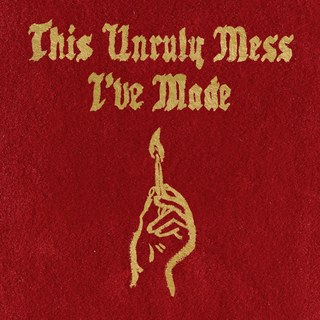
The next song I am going to discuss involved in the #BlackLivesMatter movement is “White Privilege II”. Macklemore and Ryan Lewis are known activists who are not afraid to make a stand on controversial opinions. Ben Haggerty (Macklemore) said in a Rolling Stones interview that he was following the Mike Brown and Darren Wilson incident, and on the day it was announced that Wilson was not indicted, it made him feel “physically sick, angry and frustrated”. After the news he immediately got in his car and drove to join the protest outside of the police precinct as a way to get involved and voice his opinions. This same night Haggerty says he got on the phone with an old friend (he would not name) to talk about the Mike Brown case. To his surprise his friend said, “You have a platform, but silence is an action, and right now, you’re being silent. You’re not saying anything about whats going on… You have perspective and insight onto these issues that you need to be speaking about. Its very important that you engage your audience”. Haggerty says this was a defining moment for him, this statement made him realize he needs to not only engage himself in the conversation but all the individuals listening to his music as well. This moment resulted in the creation of “White Privilege II”.
This song has a lot going on. It is a 9 minute rap song bringing to light several controversial moments of this movement, in a bit of a spastic way. The song did not do great chart wise, an NPR article written by Gene Debby even claimed “the nine minute treatise works better as a think piece than it does a song… but its certainly not counterproductive”. The song reached #1 on the Billboard + Twitter trending 140 and made its was onto Rolling Stones 22 protest anthems of the Black Lives Matter movement. Although the song itself was not ‘top chart’ material, it was definitely a conversation piece (as stated by Demby), which was Haggerty’s goal to begin with.
The song has a great gospel/chant feel behind it. At about 1:10 in the song you start to hear a chorus of people chanting “There’s blood in the streets, No Justice No Peace.” The ‘No justice, No peace’ portion of this chant is a rendition of Martin Luther Kings “There can be no justice without peace and there can be no peace without justice”. This remodelled chant was used as a mantra is several events protesting unjust police brutality.
Later on in the song the artists talk about how the hip hop culture is exploited and stolen from it’s original culture – black individuals. He calls out famous singers such as Elvis, Miley Cyrus, and Iggy Azalea specifically for taking over the culture and claims “it was never yours to make better”. This took social media by storm, receiving a ‘backlash tweet’ from Iggy Azalea herself:
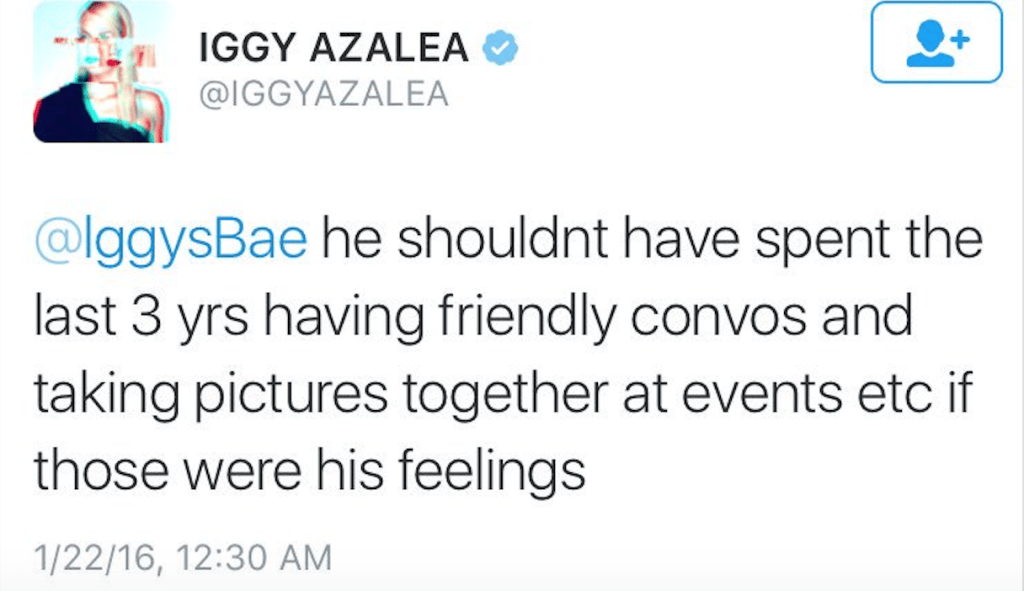
This tweet however made things worse for Azalea with fans and other famous individuals claiming she was being selfish and missing the point like so many others; The point of the song was not to bring attention to other artists, it was to engage more individuals and bring about awareness of the black lives matter movement. One of the most interesting lines in the song, trying to cause self reflection is:
We all want to take from black culture;
But will we show up for black lives?
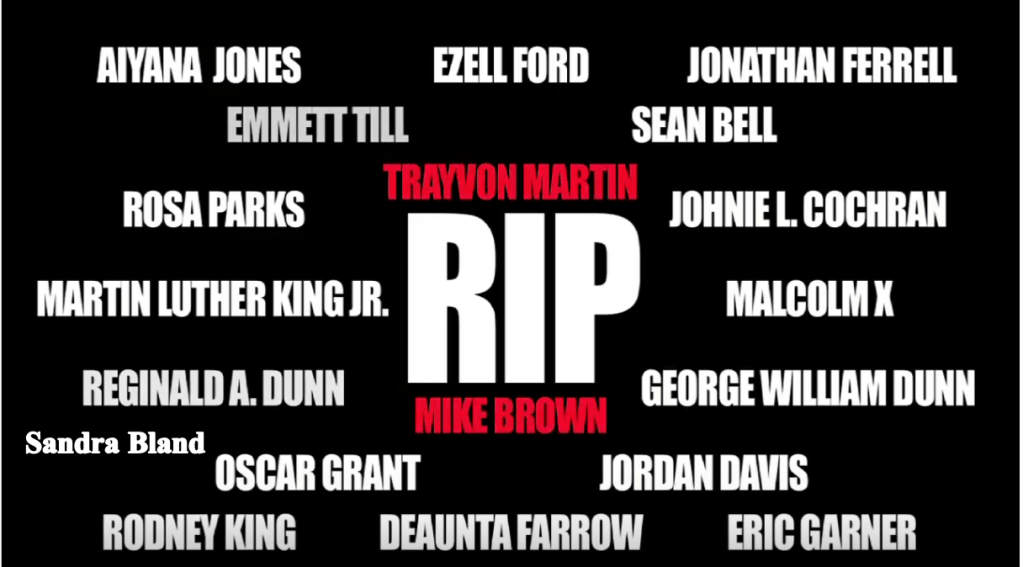
The racial profiling and unjust police brutality against black communities is a serious issue today that needs to be dealt with. These two songs are by two artists out of several that are trying to help bring attention to the matter by using their enormous social platforms. Lamar’s “Alright” encourages strength, hope, and endurance on the matter, while Macklemore’s “White Privilege II” is a conversation piece that engages the masses. Don’t take the easy action of being silent, stand up and take part in real change to stop the list below (lives of black individuals that have been unjustly taken) from growing and growing.